Lost in the epic battle against Varroa is another deadly parasite of honey bees with a global distribution and high occurrence in local apiaries. Nosema apis has largely given way to Nosema ceranae, a spore-producing parasite that recently jumped from the Asian bee to the Western bee (as did the Varroa mite). Spores remain viable long-term outside the host, and are transmitted orally via the food canal. Upon arrival in the gut of the honey bee, parasite reproduction reduces the amount of nutrients available to the host and causes damage to the digestive system. The parasitized honey bee suffers from immune suppression, severe energetic stress and intense hunger. Sick bees increase their sugar intake to no avail, and die in just six days.
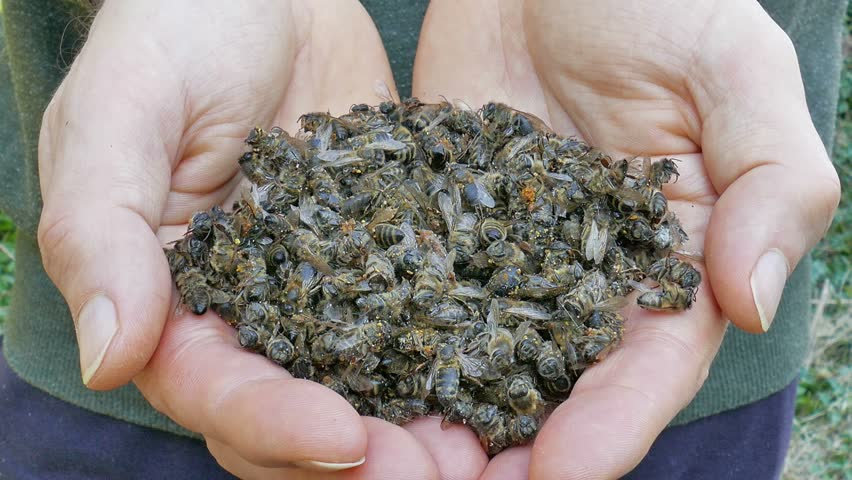
When egg laying by the queen keeps pace with bee die-off, the only indication of Nosema infection may be a stagnant colony that fails to build up. Although dysentery is associated with N. apis, this is not the case with N. ceranae. Infected bees are likely to die away from the hive, further contributing to the silence of this formidable colony killer. Collapse in winter often happens in December during the break in brood rearing. Population crashes so rapidly that there isn’t even time to remove the fallen. A thick layer of dead bees covers the hive floor and frames full of honey hang in the empty boxes. The decision to donate these frames to a new package of bees in the spring almost certainly guarantees transmission of the disease.
Collapse caused by N. ceranae is similar to that of Varroa, in that by the time the beekeeper recognizes a problem, it is often too late to save the colony. In attempting to diagnose a struggling colony in which disease is suspected, examination of the brood nest is critical. Nosema spores must be ingested to cause infection, therefore only adult bees are affected. Varroa mites and associated viruses, however, do most of their damage in the brood cell. Look for caps that are sunken, punctured or dark in color. If the brood looks healthy, infection by N. ceranae should be considered.
As usual, prevention is the best cure. Nosema spores remain viable for over a year when harbored in the comb. Feces is also contaminated. Consider anything touched by the proboscis as a potential source of infection. Use caution when purchasing a nucleus colony or used equipment. Rotate old comb out of the hive and use discretion when transferring frames of bees and brood to other hives. Winter and early spring are often marked by fecal staining on the frames and the outside of boxes — such equipment should be sterilized or discarded prior to reuse. Be careful not to squish bees during inspections, as their infected guts may spread the disease.
If infection by Nosema is suspected, options are very limited. Fumagillin is the only approved drug for treatment, but increasing tolerance has softened its overall efficacy. Alternatively, it has been found that trickling oxalic acid between combs as a means of Varroa control also hinders the development of N. ceranae. Researchers observed a decrease in the proportion of infected bees in treated colonies, and all treated colonies survived winter. This is encouraging news in the fight against Nosema.
Infection by N. ceranae is not well understood, causes no overt symptoms, offers no practical means of diagnosis and lacks a reliable treatment option. Apparently, the infection suppresses the development of Deformed Wing Virus, either via competition for host resources or activation of the host immune system. I guess the good news here is that your colony doesn’t have to collapse from mite-vectored viruses if it’s already collapsing from N. ceranae infection. Good grief. Why would anyone want to be a beekeeper?