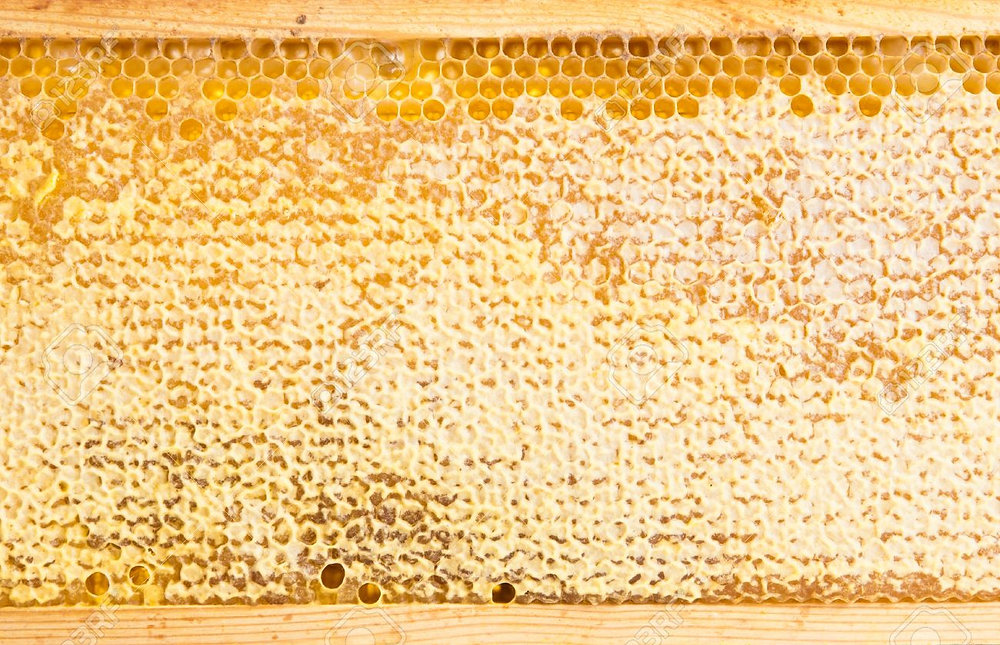
How much honey does your colony need to survive winter? This question is asked often, and the answer typically falls in the range of 80–100 pounds. This is a safe answer, because it will satisfy the needs of a large colony during a cold winter. But it may not be accurate enough for your particular situation. For example, you may be tight on reserves after the harvest, or have a small colony due to a late split or health issues.
I developed a formula to help beekeepers determine how much honey needs to be on their hive come November. It gives you a rough estimate using data gathered from published scientific research. In the interest of keeping it simple and reliable, a number of conservative assumptions have been made, resulting in an overestimation of required reserves with a comfortable margin of error.
Assumptions:
- Overall colony health is good
- Hives located in the SLC metro area
- Winter from Nov 1 to March 31
- Average temps based on historical data
- Colony population remains unchanged
- No credit for additional nectar gathered
- No recognition of a broodless period
The amount of honey required under these circumstances primarily depends on the population of the winter cluster. Use the following values to estimate the number of bees that will be in your hive at the start of winter (Nov 1):
- Fully covered in bees, no comb visible — Deep: 1000 / Medium: 700
- Less than fully covered, but more than half — Deep: 750 / Medium: 500
- About half covered in bees — Deep: 500 / Medium: 350
- Significantly less than half covered — Deep: 250 / Medium: 200
Don’t wait until Nov 1 to estimate your winter population. You need to know now, so corrective action can be taken. Keep in mind the colony is getting smaller every day, so round down. If you’re uncertain, use the higher number.
N × .0022 = pounds of honey needed
Example: 18,000 bees × .0022 = 40 pounds
Add the honey in your hive to see if you have the required reserves:
- Full Deep (both sides) = 6 pounds
- Full Medium (both sides) = 4 pounds
If you’re short, feed one quart of syrup (2 parts sugar and 1 part water, by weight) for every two pounds of additional honey you need. Honey bees can only sustain flight at temperatures above 55°F. For the five months from November to March, the average high temperature in Salt Lake City is below 55°F. If you can’t quite meet the reserve amount, consider insulating your hive to some degree.