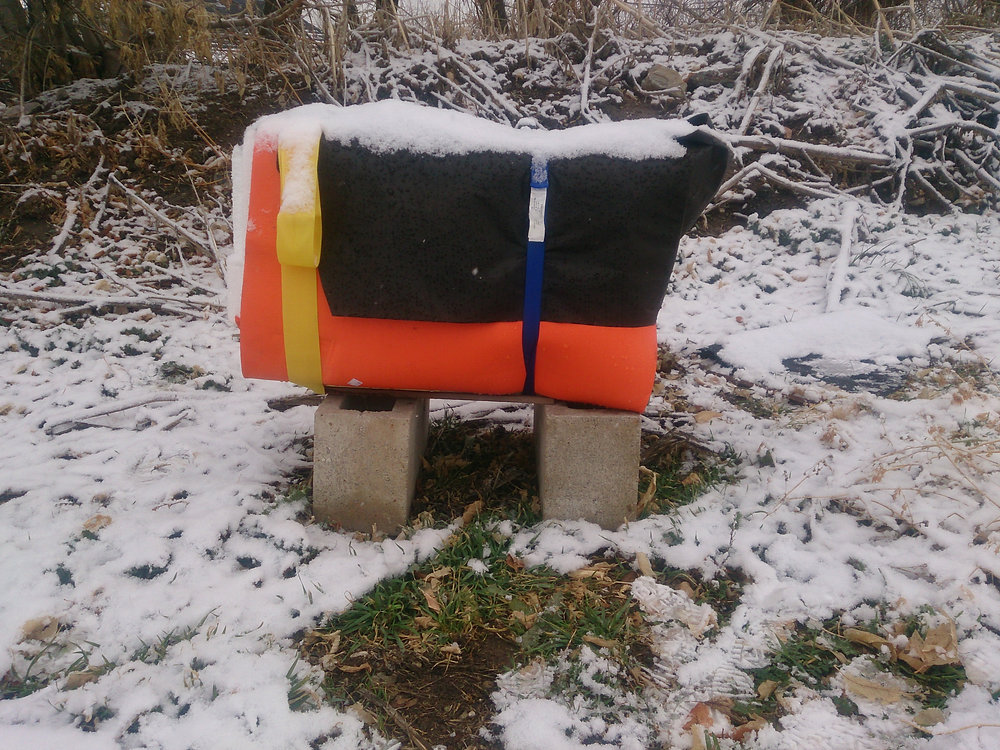
At issue is heated air that escapes the cluster and rises to the top of the hive. Upon contact with the cold hive ceiling the air cools and releases moisture. Condensed water now threatens to drip back down and chill the bees. Practically without exception, the solution given is to ventilate the upper hive to allow humidity to escape. A very excellent article published in Bee Culture magazine last year expressed concern with that technique:
“...beekeepers have devised ways to use the inner cover’s escape hole to ventilate all that warm moist air, without regard for the consequences of lost heat... we know how to keep condensation levels down by adding lots of ventilation, but do we know enough to understand how to balance ventilation with the needs of wintering bees? ...how much of our current practice of provisioning 60-100 lbs of honey per wintering colony is being driven by removing lots of heat the bees must replace?”— Bee Culture magazine
If there’s a positive associated with the plight of honey bees, it’s the millions of dollars of research money spent every year trying to help them survive. Some of the things we have learned contradict long standing theories, but the traditional nature of beekeeping makes old habits hard to break. Myths that seem to make sense can trump the research.
Beekeepers go to length to ensure water is available to their bees all year, then the cold weather arrives and every effort is made to deprive them. Bees need water in winter to dilute honey, supply digestive secretions, flush waste and produce royal jelly (Johansson 1979). The cluster core is already at high risk of dehydration (Omholt 1987). Also, humidity in the hive disrupts mite reproduction and is essential for eggs to hatch.
If upper ventilation succeeded in removing moisture from the hive, there’d be no need for a quilt. Humid air rises to the top of the hive and meets cold air coming in through the vent holes, causing condensation. The quilt’s damp upper surface is clear evidence that condensation is taking place inside the hive and above the cluster, exactly what the system is meant to prevent. The vent holes may facilitate evaporation to dry out the quilt, but they’re also largely responsible for the quilt becoming so wet (Toomemaa 2013).
Humid air would hardly reach the vent holes if the quilt insulated. It must remain permeable enough to allow humidity to flow through it. Only then can water condense above it to be reabsorbed as it comes back down.
It should be well understood that cold kills honey bees. When thorax temperature drops below about 40°F the bee enters a chill coma, causing her to fall from the cluster and die on the hive floor (Free 1960). It is only true that a wet bee loses heat faster than a dry bee, because water is a better conductor of heat than air. But it is the loss of heat that kills.
During winter, air circulates the hive automatically due to convection. Provided the cover is well insulated, the absence of upper vent holes allows rising warm air to deflect back downward where it loses heat to the incoming flow. Fresh cold air gets preheated before reaching the cluster, reducing the metabolic load of the colony. Moisture either exits the hive with the flow or condensates in the coldest areas beneath the cluster (Sudarsan 2012).
Constantly flushing large volumes of air from the hive works against colony efforts to lower their metabolic rate. The accumulation of CO2 and reduction of O2 in the winter cluster is a survival tactic, inducing a stillness that promotes the longevity and vitality of the colony (Zherebkin 1979). Colonies with closed entrances consumed less food, lost fewer bees and reared more brood in spring.
Insulation helps keep the upper surfaces warm enough to delay water from condensing until clear of the cluster. Control moisture by preserving heat, not removing it (Bornus 1974). Attempts to insulate a hive that is top ventilated are futile — air flow through the roof negates the value of insulation (Bielby 1974).
Mites aside, successful overwintering is a matter of reducing the metabolic load of the winter cluster. Manage moisture by imitating the tree hive: a well-insulated cavity and a small bottom entrance (Seeley 1976-8). Less than half our hives survive winter, yet our techniques remain basically the same. It’s time we find a better way.
References
- Bielby (1974) — Influence of type of hive on wintering conditions
- Bornus (1974) — Wintering of bees in one-wall hives in cold climate
- Free (1960) — Chill-coma and cold death temperatures of Apis mellifera
- Johansson (1979) — The Honey bee colony in winter
- Omholt (1987) — Why honeybees rear brood in winter
- Seeley (1976/1978) — The nest of the honey bee; Nest site selection by the honey bee
- Sudarsan (2012) — Flow currents and ventilation in Langstroth beehives
- Toomemaa (2013) — Determining the amount of water condensed above and below the winter cluster
- Toomemaa (2016) — Winter mortality of honey bee colonies
- Zherebkin (1979) — Wintering of bees